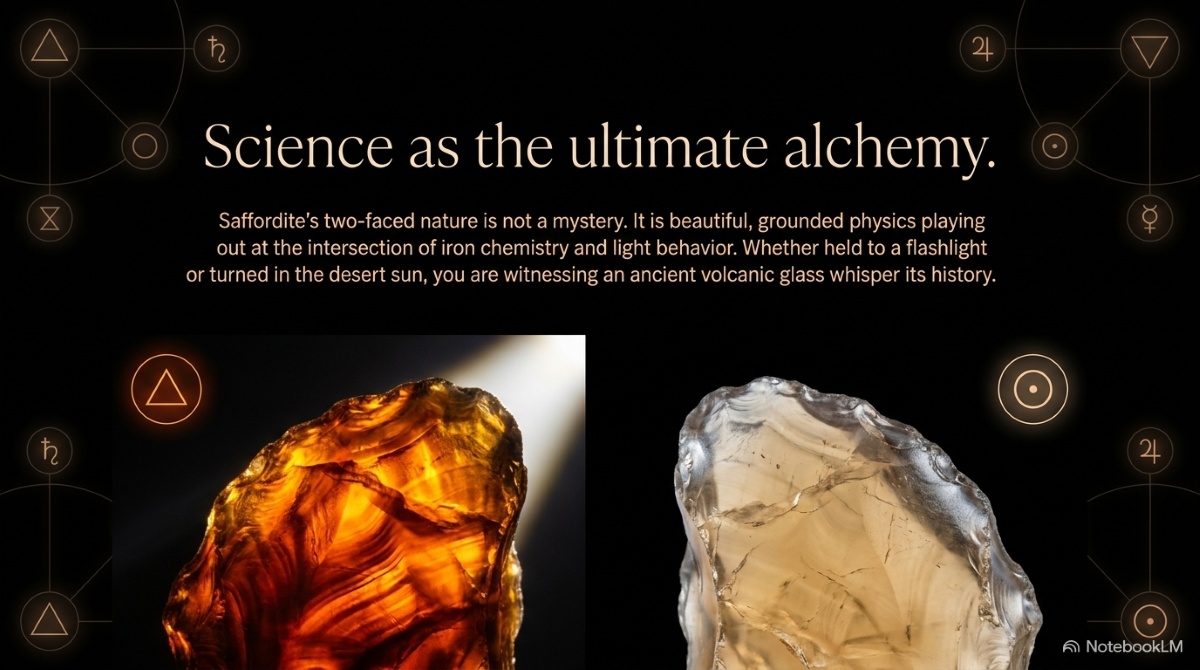
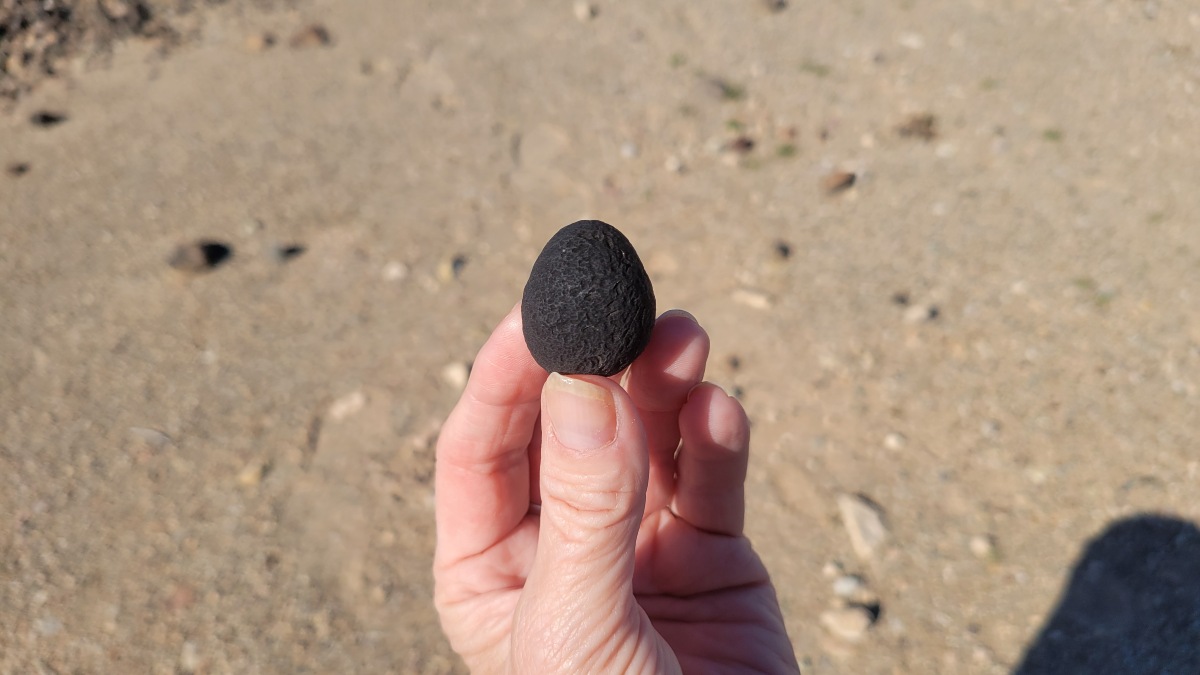
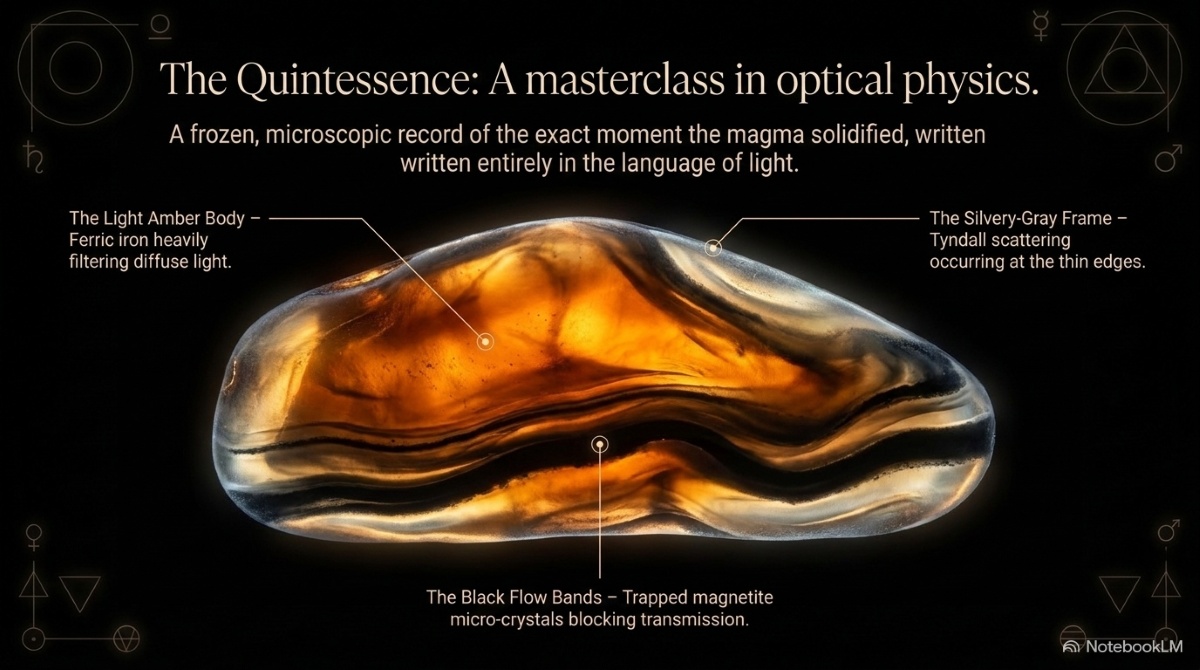
If you have ever held a translucent Arizona Saffordite up to a flashlight, you have seen the magic firsthand. In your hand under ordinary daylight, the stone sits as a pitch-black unassuming nodule. But press your phone light directly against its surface, and the obsidian instantly transforms, radiating a fiery, gray to amber glow from its core, framed by cool silvery-gray edges.
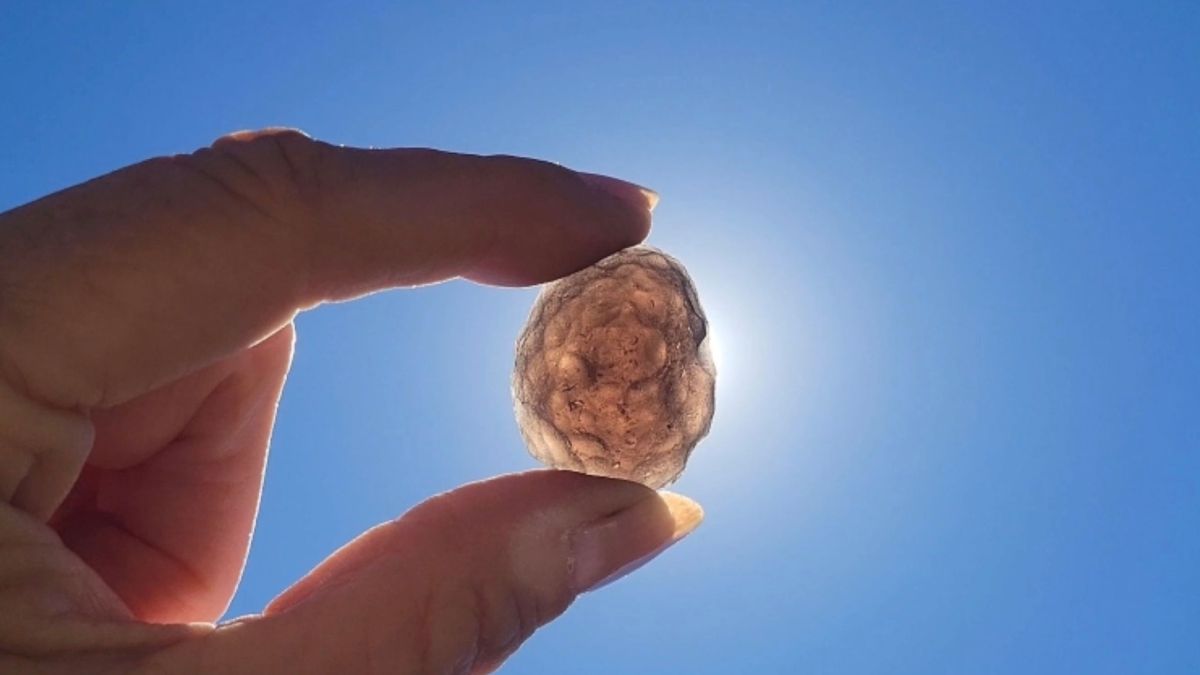
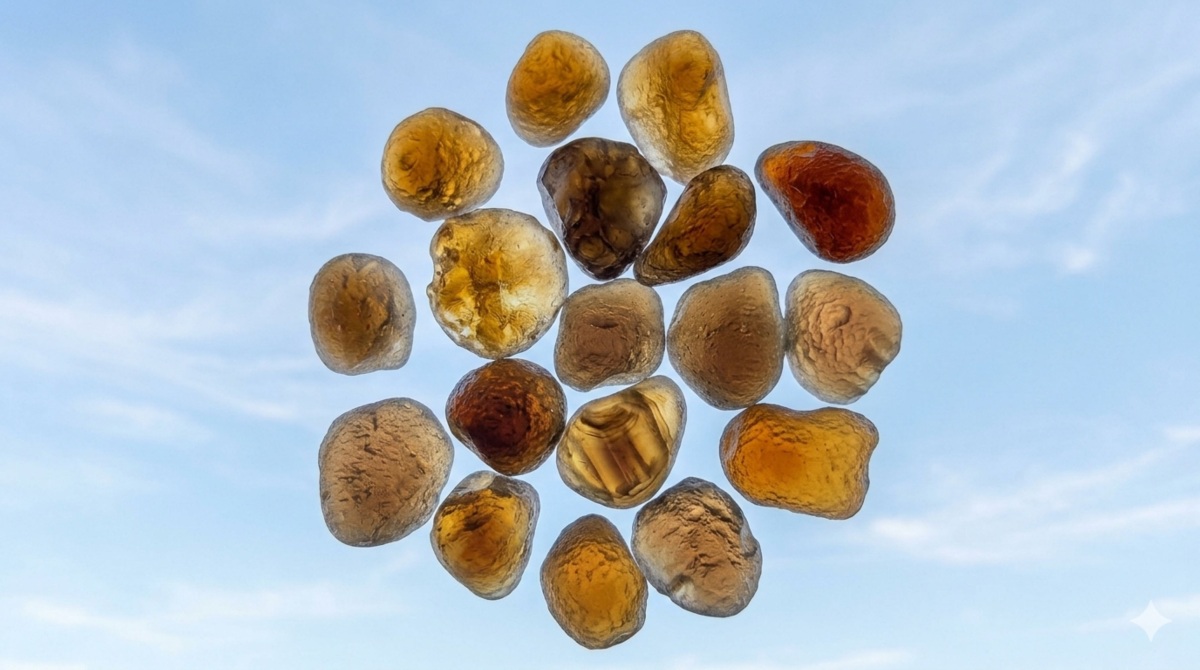
Even more fascinating is what happens when you step outside. In the open, diffuse light of the desert sun, the stone doesn’t turn gray or lose its warmth. Instead, that fiery amber softens into a delicate, translucent light amber to extra-light amber—like pale honey or warm skin tones—while the silvery-gray edges remain visible, gently framing the stone’s contours.
For years, the gemstone trade has struggled to explain this two-faced optical behavior, often reaching for mystical explanations. But the truth is grounded in volcanic chemistry and optical physics. By looking at how light travels through iron-bearing glass—and how it scatters at the edges—we can finally map out exactly how this incredible color split happens.
1. The Phone Light Test – The Warm-Pass Iron Filter
The shift in colors you are seeing between smoky gray and light amber comes down to the microscopic chemistry of the volcanic glass, specifically the oxidation states of iron and how they interact with the specific spectrum of your phone’s LED light.

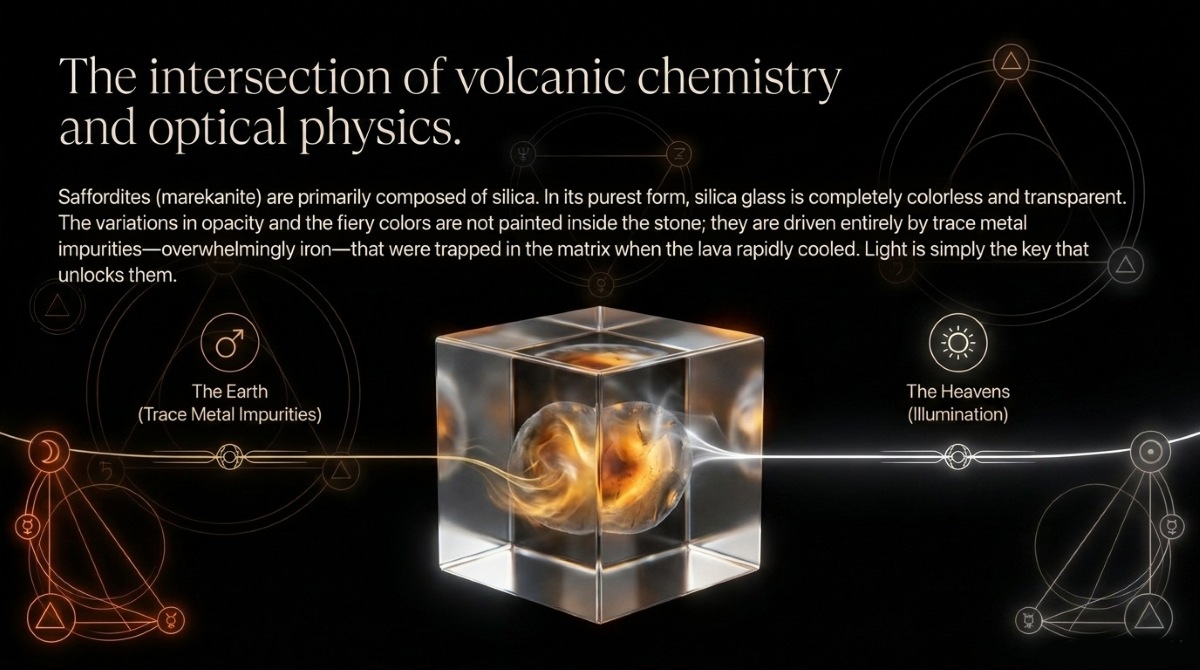
Saffordites (marekanite) are primarily composed of silica. In its purest form, silica glass is completely colorless and transparent. The variations in opacity and color you see when you backlight them are driven by trace metal impurities—overwhelmingly iron—that were trapped in the matrix when the lava rapidly cooled.
Here is exactly what the smoky gray and light amber colors tell you about the iron content within each specific stone:
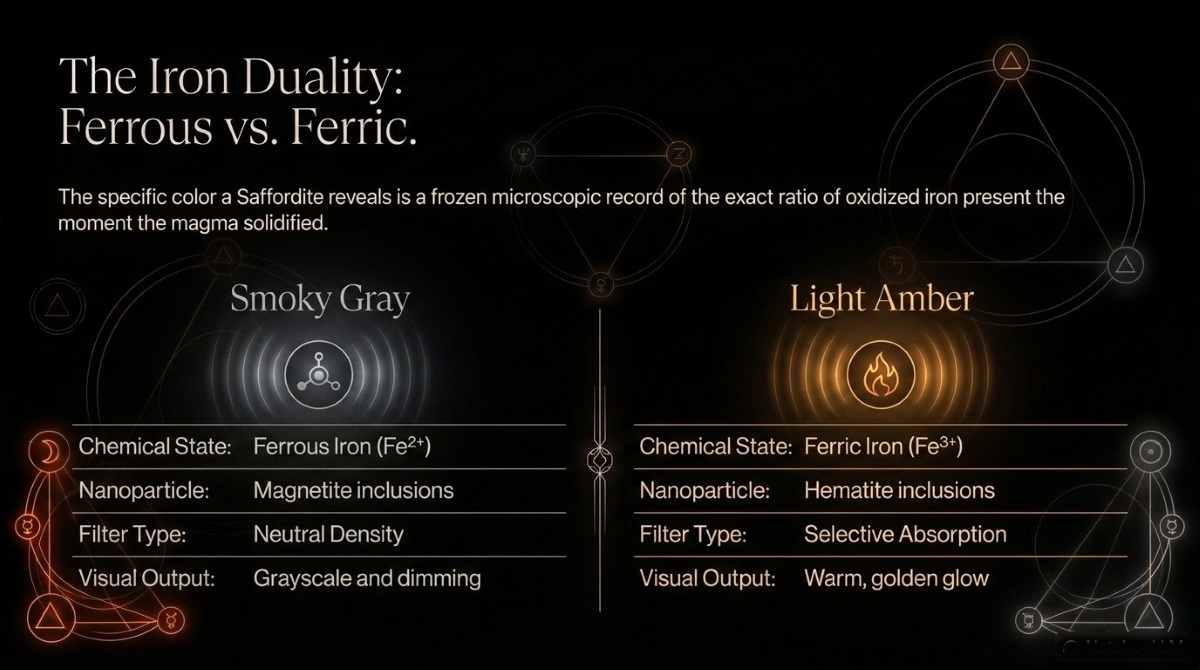
Smoky Gray Stones (Ferrous Iron & Magnetite)
When a Saffordite shows a smoky gray or cooler tint, it indicates a higher concentration of ferrous iron or the presence of microscopic nanoparticles of magnetite.
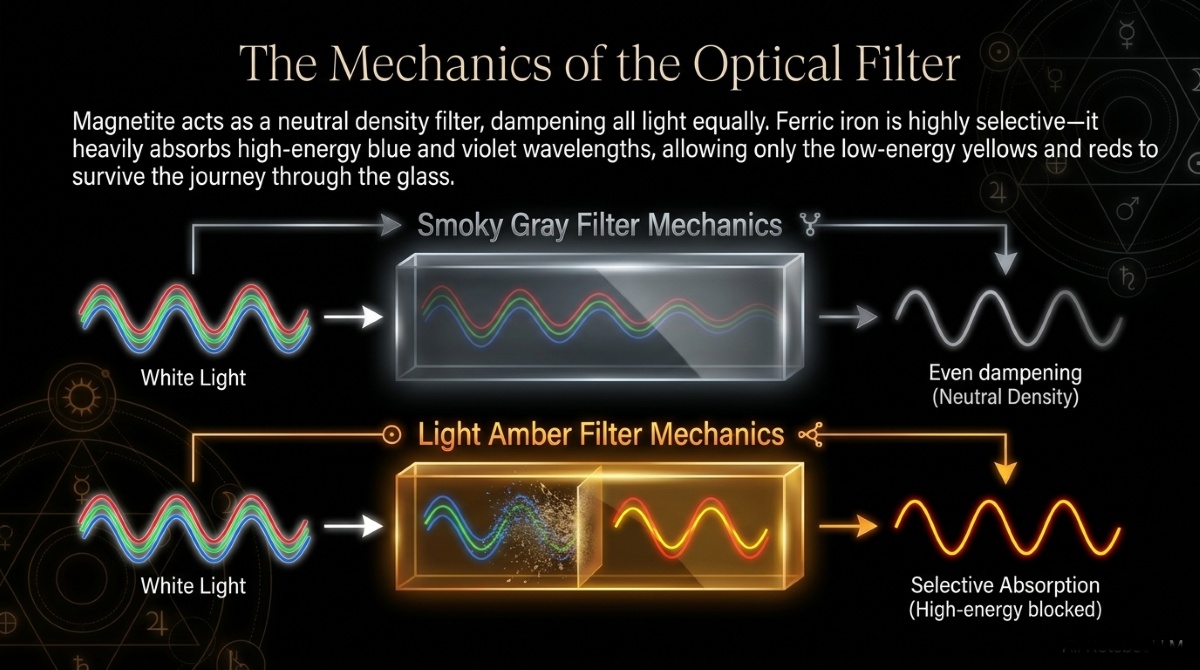
- How it filters light: Magnetite and ferrous iron act like a neutral density filter. They absorb light relatively evenly across the entire visible spectrum. Because they don’t strongly favor absorbing one color over another, the white light from your phone is simply dimmed and diffused, creating a grayscale or smoky effect rather than a distinct color.
Light Amber Stones (Ferric Iron & Hematite)
When a Saffordite lights up with that warm, golden honey or amber color, it indicates a shift toward ferric iron or the presence of nanoinclusions of hematite.
- How it filters light: Unlike magnetite, ferric iron and hematite are highly selective in how they absorb light. They heavily absorb the higher-energy wavelengths (blues, violets, and greens) while allowing the lower-energy wavelengths (yellows, oranges, and reds) to pass through the glass. The amber color isn’t “painted” inside the stone; it is the leftover light that successfully made it through the iron filter.
The Phone Light Variable
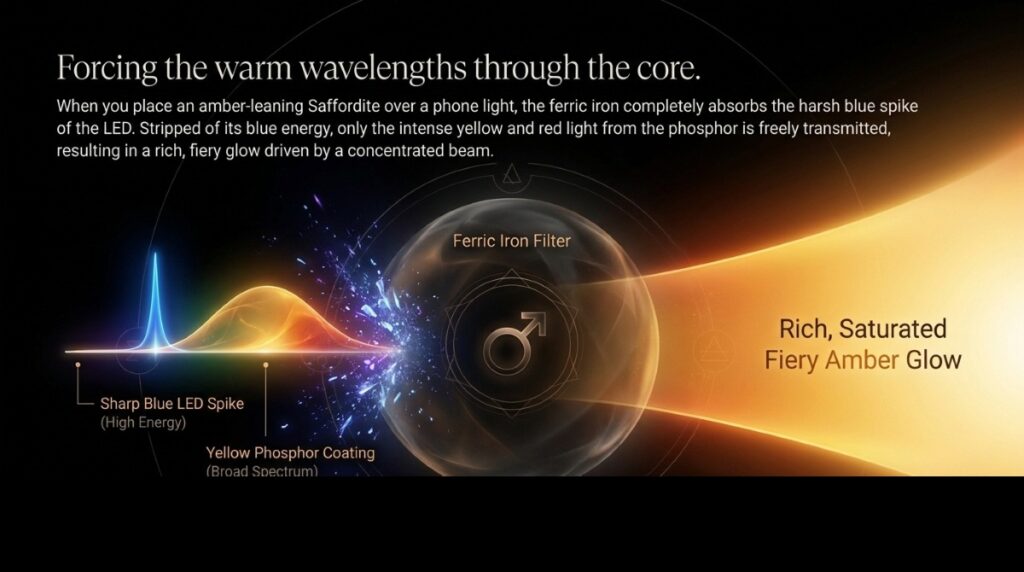
The light source itself plays a massive role in this visual equation. A standard smartphone flashlight is not a perfectly balanced white light; it is typically a strong blue LED coated in a yellow phosphor to trick the human eye into seeing white.
When you place an amber-leaning Saffordite over a phone light, the stone completely absorbs the harsh blue spike of the LED and freely transmits the phosphor’s yellow and red light, resulting in a rich, warm glow. When you place a gray-leaning Saffordite over the same light, it just dampens the entire white output evenly, resulting in the smoky profile.
Ultimately, the spectrum from gray to amber across your samples represents a frozen, microscopic record of the exact ratio of oxidized ferrous iron vs ferric iron present in each specific nodule the moment the magma solidified.
2. The Daylight Test: Why the Amber Softens to Light Amber
Now, take that same stone outside into open, diffuse daylight. The visual shift is subtle but unmistakable.
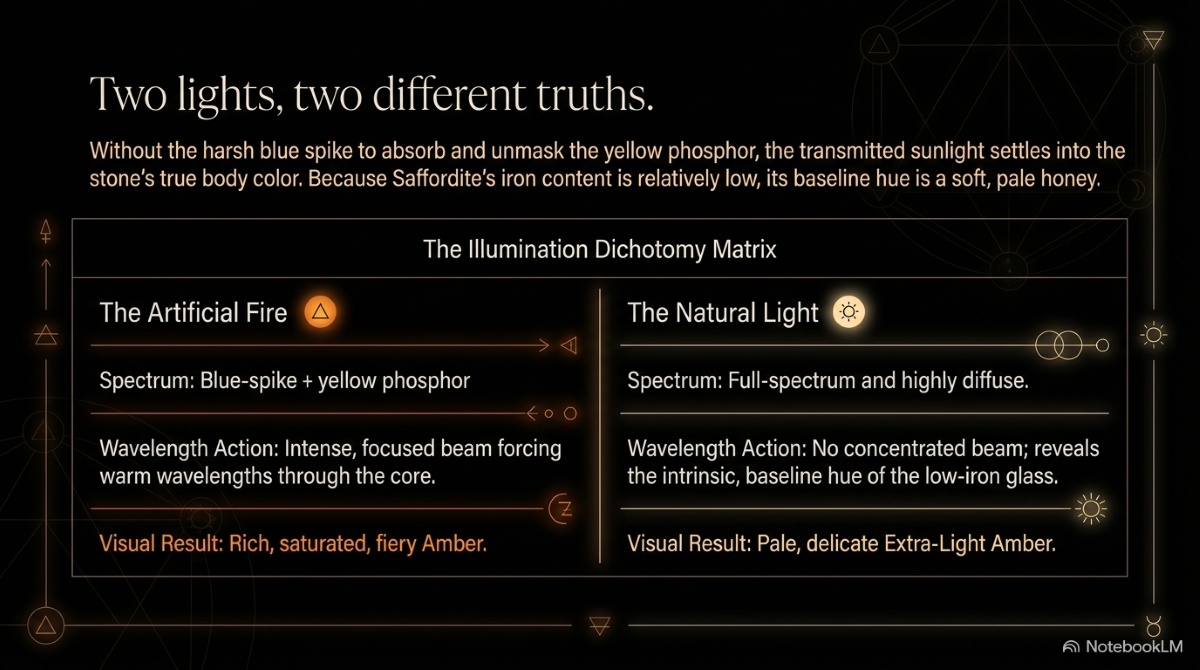
In the sun, you lose the forced, narrow spectrum of the LED. Sunlight is full-spectrum and diffuse. Without that harsh blue spike to absorb and unmask the yellow phosphor, the transmitted light settles into the stone’s true, delicate body color—a pale, translucent honey-amber.
Why the Amber Becomes “Light Amber to Extra-Light Amber”
The rich, fiery amber you saw under the phone light was the result of an intense, focused beam forcing warm wavelengths through the glass. In daylight, the illumination is diffuse and full-spectrum. There is no concentrated beam driving those warm wavelengths through the core.
Instead, you are seeing the stone’s intrinsic body color—the actual, baseline hue of the iron-tinted glass. Because Saffordite’s iron content is relatively low compared to darker obsidians, this intrinsic body color is not a deep, saturated amber. It is a delicate, translucent light amber, skin-tone, or extra-light amber. The intensity drops, revealing the stone’s true, softer palette.
3. Banded Saffordites: The Internal Landscapes
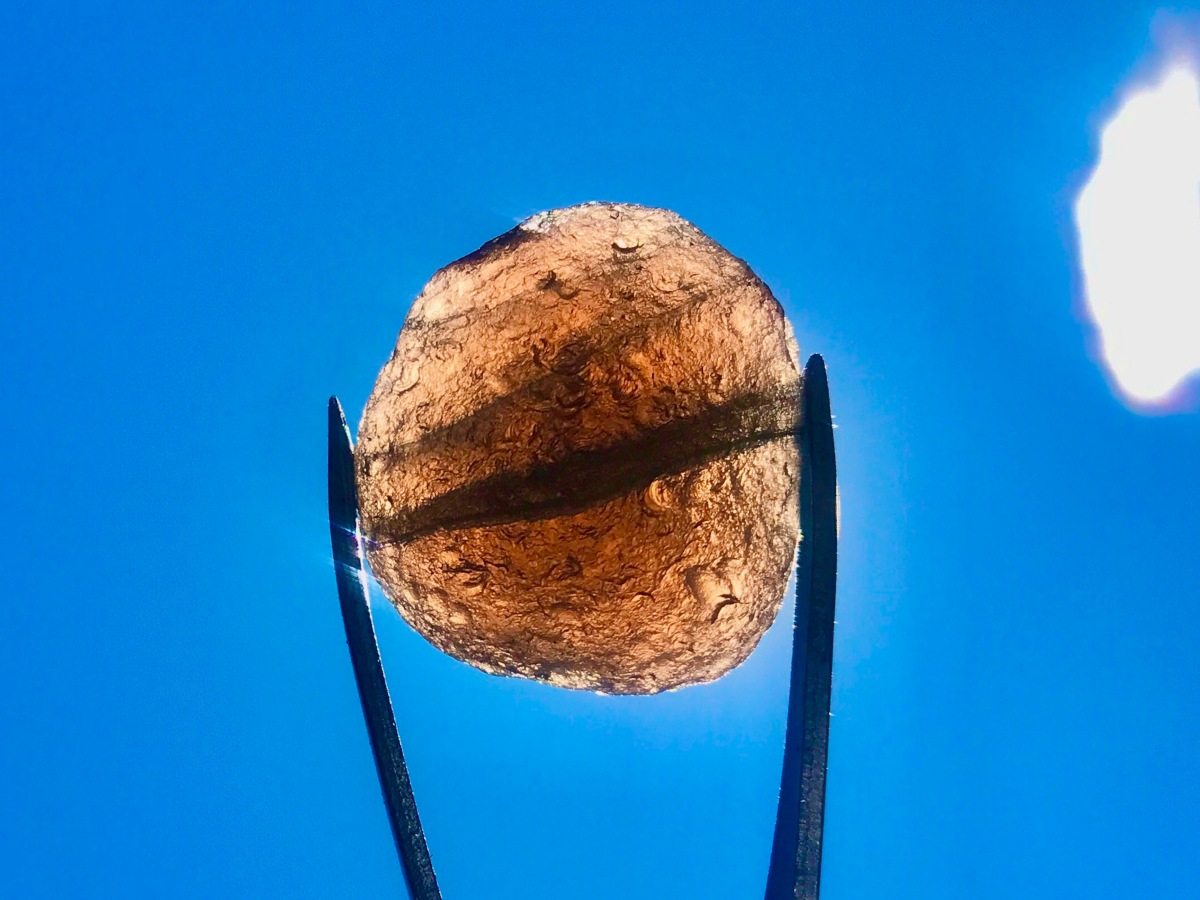
Those dark bands—floating like internal ghosts inside the pale, glowing translucency—are not flaws. They are flow banding, and they are the “fingerprints” of the stone’s violent volcanic birth.
What Those Dark Bands Actually Are
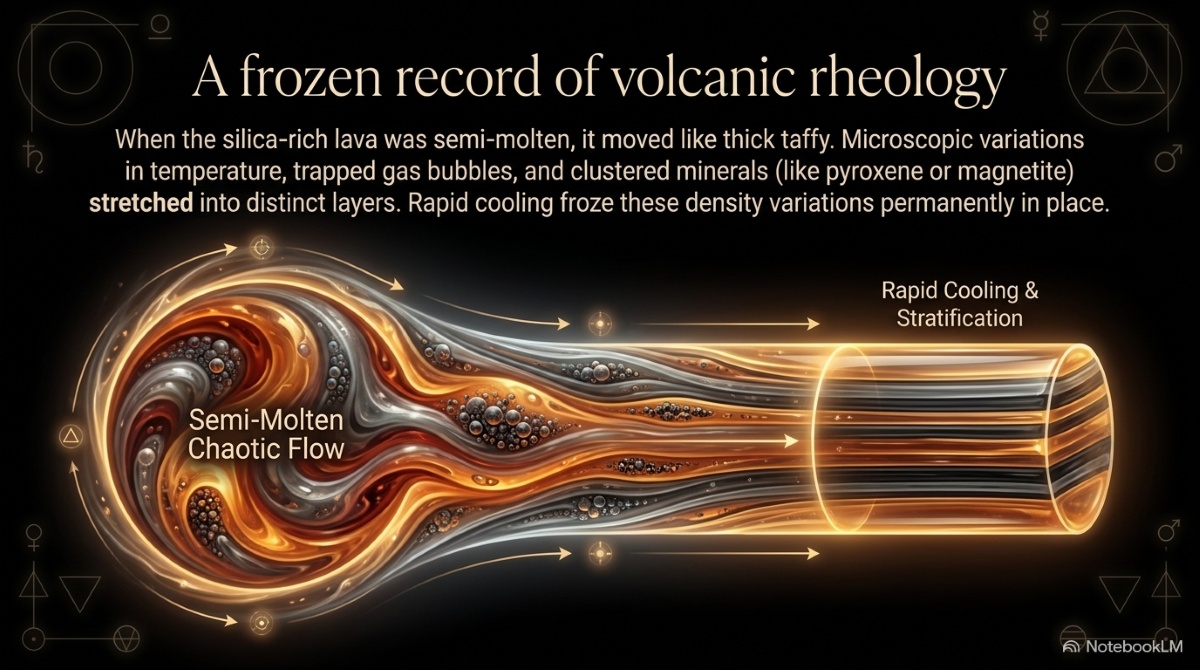
When the silica-rich lava that formed Saffordite was still semi-molten and flowing, it moved like thick taffy. Microscopic variations in temperature, gas content, and mineral concentration created distinct layers within the glass. When the lava cooled rapidly, these layers were frozen in place as density variations:
- Some bands had slightly more ferrous iron.
- Some bands had microscopic clusters of magnetite or pyroxene crystals.
- Some bands were full of micro-bubbles of trapped gas.
Fast-forward thousands of years: the surrounding perlite eroded away, releasing these nodules. When you shine a light through them, those ancient flow-lines reveal themselves.
Why They Look Dark Against the Glowing Matrix
Think of a band as a microscopic curtain hanging inside the stone. The glass on either side is highly translucent, but the material inside the band is packed with iron and micro-crystals. When light hits that band, it is absorbed and scattered chaotically. Because so little light survives, it appears dark gray or black in stark contrast to the bright amber matrix.
- Dark Gray bands: The band is thin or moderately dense; a dim glow strains through.
- Black bands: The band is thick or packed with magnetite; it acts like an opaque wall.
Why Collectors Love Flow Banding
Synthetic glass does not have internal flow banding—it is uniform. When you see these stark, layered dark bands inside the translucent glass, you are looking at frozen volcanic rheology. No two stones have the same pattern, making each one a unique geological snapshot.
The Final Bottom Line
Saffordite’s two-faced nature is not a mystery. It is physics—beautiful, grounded physics playing out at the intersection of iron chemistry and light behavior.
- Under a flashlight: Intense backlight forces warm amber wavelengths through the core, while Tyndall scattering at the thin edges creates a cool silvery-gray frame.
- In daylight: The same stone reveals its intrinsic pale amber body color—light, warm, and translucent—while the gray edges persist as subtle, ethereal highlights.
Whether you are holding it up to an LED or turning it in the desert sun, you are witnessing the same elegant interplay: a volcanic glass whispering its geological history through the language of light.