No two Saffordite stones are exactly alike. One may be small and smoothly rounded, while another has deep dimples, an unusual shape or beautiful color that appears only when held to the light. That natural variation is part of what makes choosing a Saffordite so interesting—each stone has its own character.
After handling and sorting many Saffordites, we have found that the stones that stand out most are not always the largest, darkest or most translucent. Sometimes a stone that seems fairly simple at first becomes a favorite. It may be the way it feels in your hand, its surface texture or an unexpected color revealed when backlit.
If you have searched for Saffordites online, you may also have encountered the term Arizona Tektite. Although this is a commonly used name for Saffordite in the marketplace, scientific sources identify Saffordite as weathered volcanic glass rather than confirmed tektites or impact glass.
If you are wondering how to choose a Saffordite stone, it helps to look beyond any single feature. Size, shape, surface texture, color and translucency can all influence what makes one stone stand out from another. But before comparing those details, the best place to start is with a simpler question: how do you hope to enjoy your Saffordite?
1. Start With Your Purpose
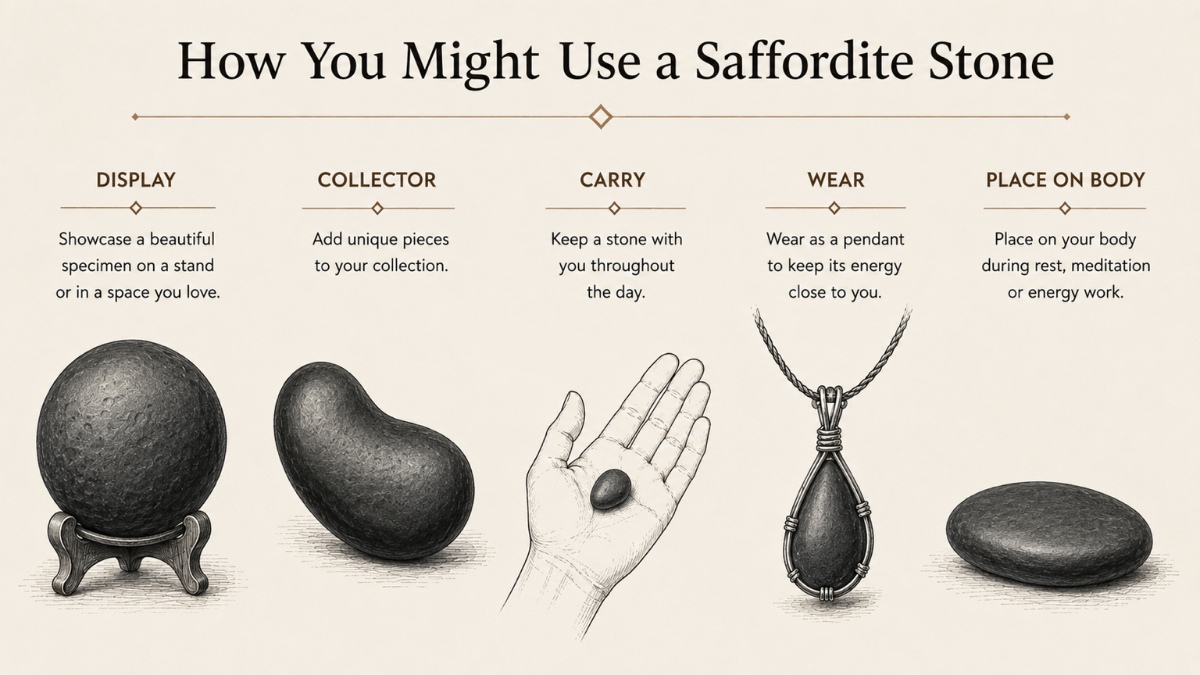
Before comparing individual stones, think about how you hope to enjoy your Saffordite. Are you looking for a stone to hold during meditation, carry with you, wear as a pendant or place on your body for chakra alignment? Or are you more interested in displaying it, adding it to a mineral collection or simply keeping it because something about it catches your attention?
If you plan to carry or frequently hold your stone, comfort may matter more than size. For a pendant, shape and weight may be especially important. A collector may be more interested in unusual texture, shape, translucency or other distinctive natural features. For display, a larger or especially interesting specimen may have a more visual presence.
There does not have to be a complicated reason behind your choice. Sometimes one stone simply stands out. Part of the enjoyment is discovering which characteristics appeal to you most.
2. Consider the Size
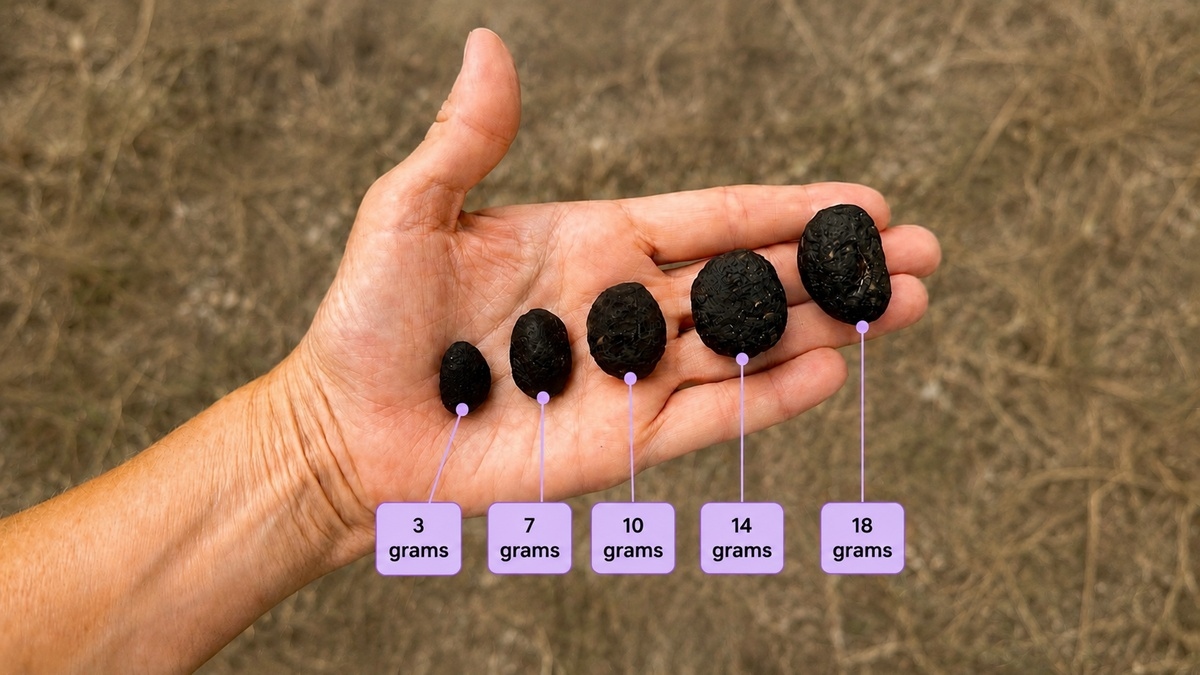
Saffordites range from tiny stones to much larger specimens, but bigger does not necessarily mean better. A small Saffordite can have remarkable texture, shape and translucency, while a larger stone may stand out for its presence and the amount of natural surface there is to appreciate.
If you plan to hold your Saffordite, consider its dimensions as well as its weight. Two stones of similar weight can feel surprisingly different. A flatter stone may spread comfortably across your palm, while a thicker, more compact Saffordite of the same weight can appear and feel considerably smaller.
Smaller Saffordites are convenient for carrying, wearing or incorporating into crystal grids and other arrangements. Medium-sized stones often provide a comfortable balance between handling and visual presence. Larger specimens can make impressive display or collector pieces. They may also appeal to practitioners who prefer a more substantial stone for meditation or personal energy practices.
Rather than choosing by weight alone, look at the stone’s overall proportions and consider how you plan to use it.
3. Look at the Shape
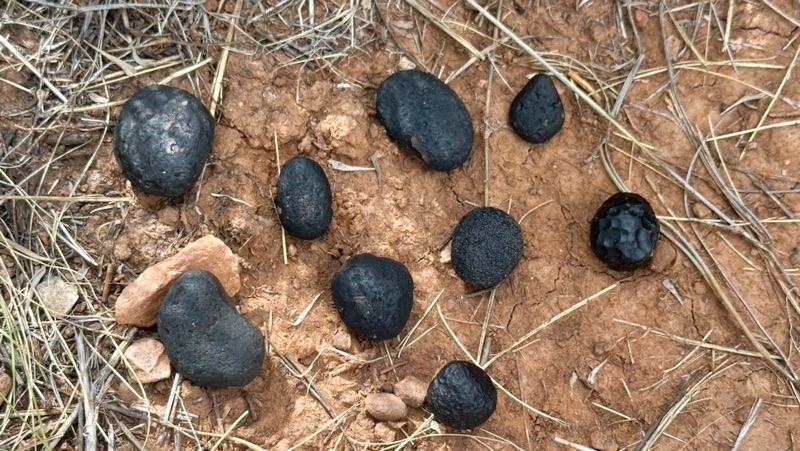
Part of Saffordite’s appeal is its natural variety. Rather than being cut or shaped into standardized forms, each stone retains the natural shape in which it was found. Saffordites may be rounded, oval, flattened, elongated or irregular, and some naturally resemble familiar forms such as kidneys, teardrops or even hearts.
Rounded and oval stones often feel comfortable in the hand or pocket. Flatter specimens may be preferred for placement on the body during meditation, chakra work or other energy practices. Elongated, asymmetrical or sculptural shapes can be especially appealing to collectors because of their distinctive character.
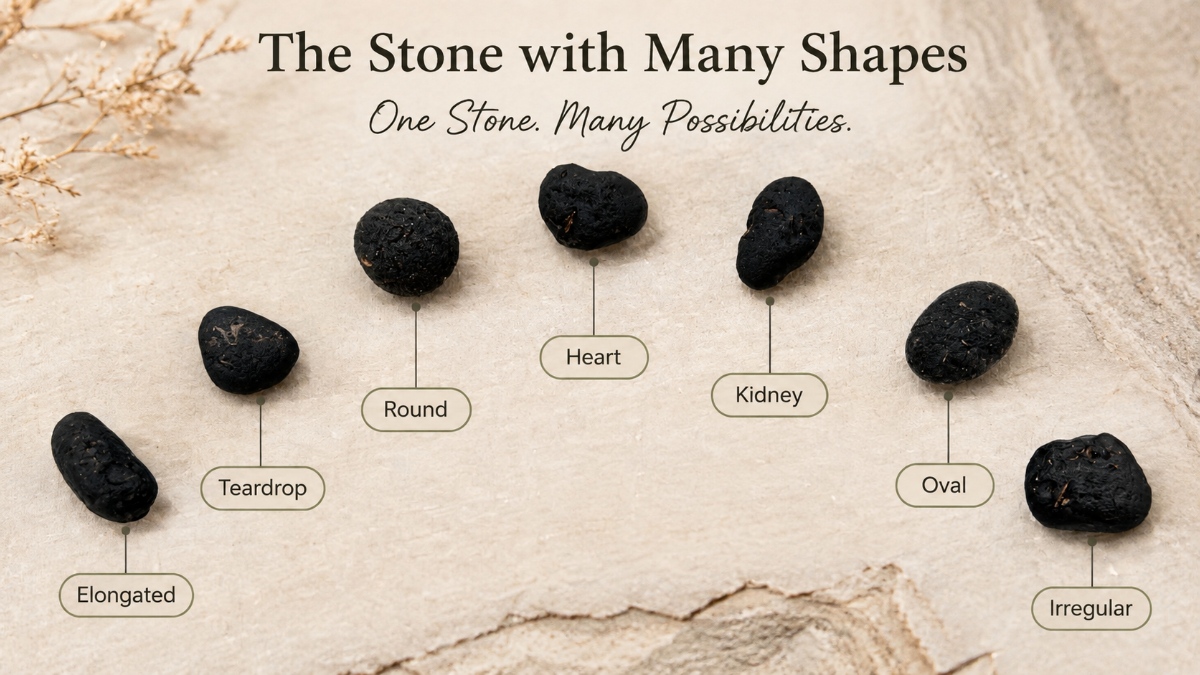
Don’t automatically overlook a stone because its shape seems uneven or unconventional. Sometimes a curve, indentation or unusual silhouette is exactly what makes a Saffordite memorable.
4. Pay Attention to Surface Texture
Texture is one of Saffordite’s most fascinating characteristics. Some specimens have relatively smooth, matte surfaces, while others are deeply cratered, with pronounced dimples, pits and grooves that can give them an almost moon-like appearance.
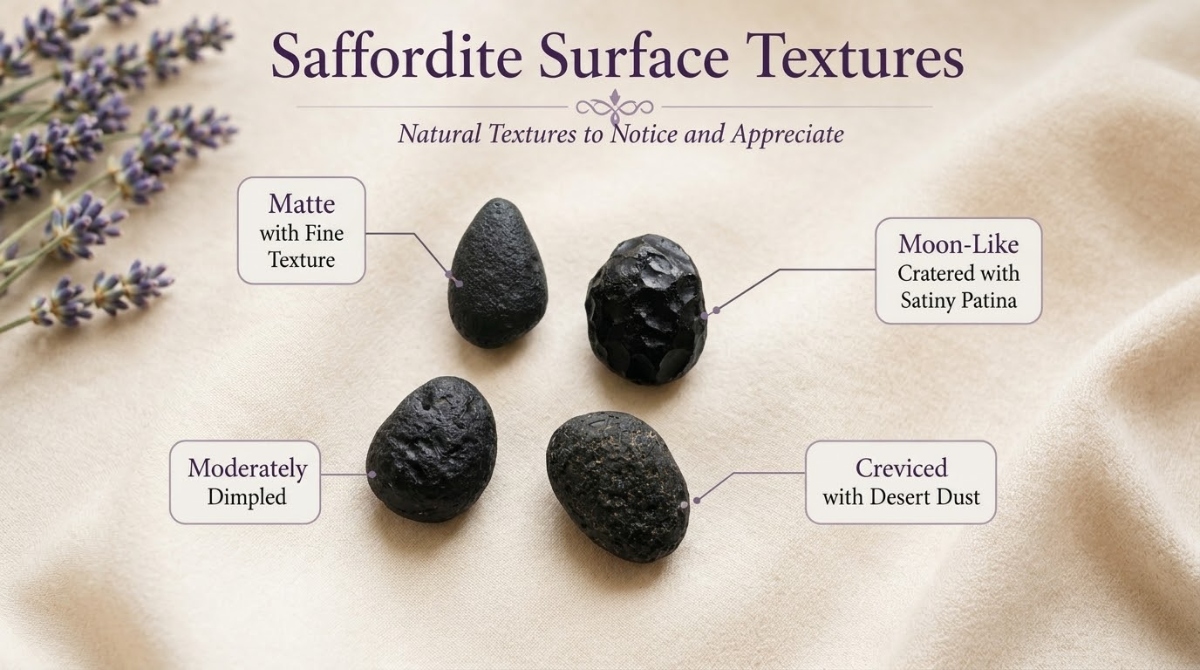
Some of these stones are especially striking because their heavily textured surfaces are paired with a jet-black exterior and a soft, satiny natural patina. Light and shadow settle into the craters and contours, emphasizing the texture and making the surface itself one of the stone’s most distinctive features.
Some Saffordites also retain small areas of brown, white or greenish natural mineral and soil deposits within their pits and crevices. We like to call this “ancient desert dust.” Rather than seeing it as an imperfection, we think it adds character—a small visible reminder of its ancient volcanic origins.
We gently clean our Saffordites using only water. We do not apply oils, polishes or other products to enhance their color or finish, so some of these natural deposits may remain tucked within the deeper crevices of a stone.
A smoother stone may appear especially comfortable to hold, while a deeply textured specimen can offer dramatic visual interest for display or collecting. Neither is inherently better. When choosing a Saffordite online, look closely at the photographs and consider which surface texture appeals to you most.
5. Look at Color and Translucency
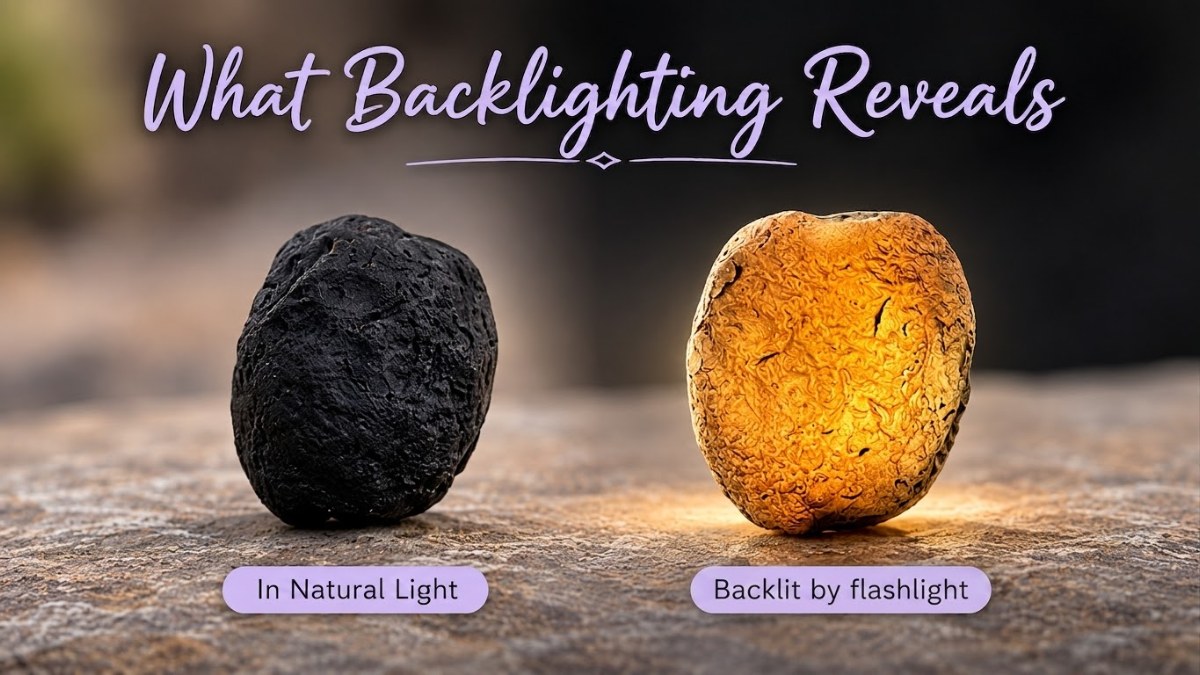
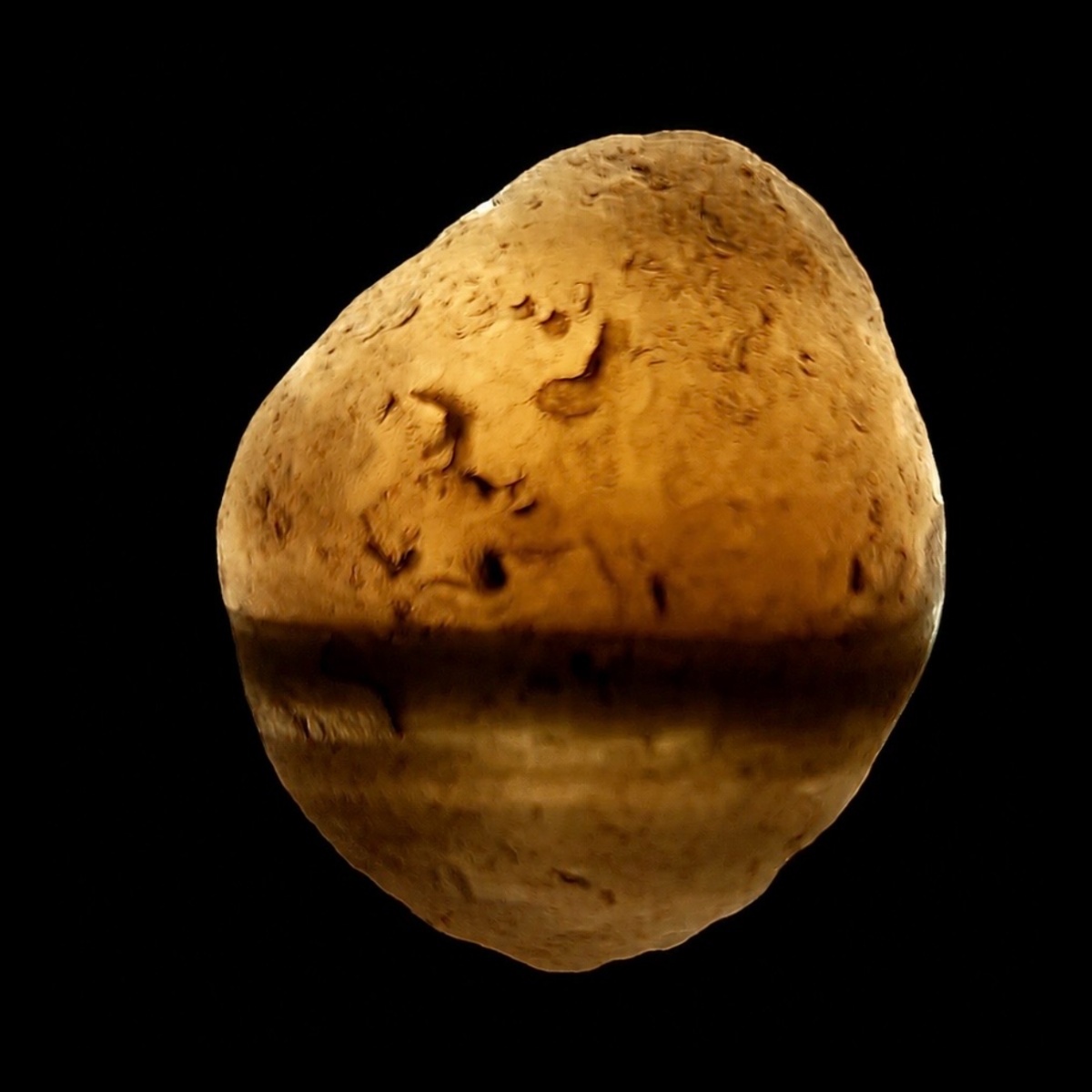
One of the biggest surprises when seeing a Saffordite for the first time comes when you hold a seemingly dark stone to a strong light. Depending on the individual specimen and its thickness, backlighting may reveal smoky gray, amber, honey-gold and other subtle tones that are nearly invisible under ordinary lighting.
Understanding Different Levels of Translucency
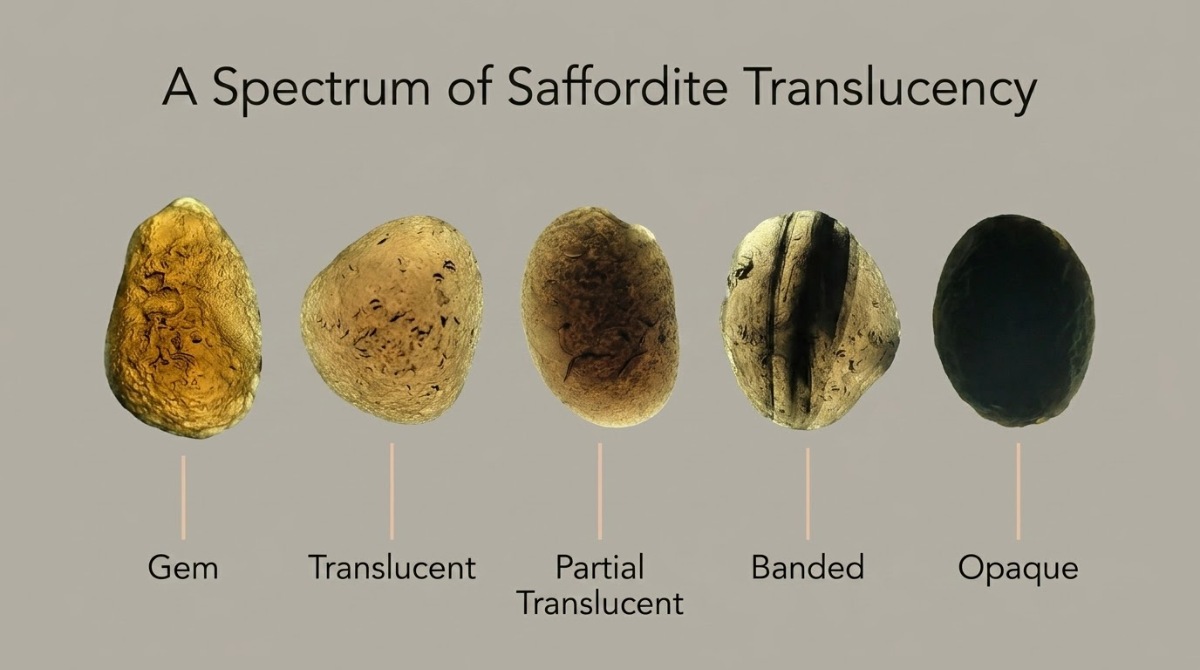
Saffordites vary greatly in how much light they transmit. Terms you may encounter include gem quality (exceptional clarity), translucent, partially translucent, banded and opaque. These are descriptive collector and marketplace terms rather than standardized scientific grades. Gem-quality stones may illuminate with remarkable clarity, while translucent and partially translucent specimens allow varying amounts of light to pass through. Banded Saffordites may reveal distinct layers or areas of translucency, while opaque stones retain a darker, more solid appearance even under strong light.
More translucency is not necessarily better. Each type has its own character, and what appeals to you may depend on your intended use as well as your personal preferences.
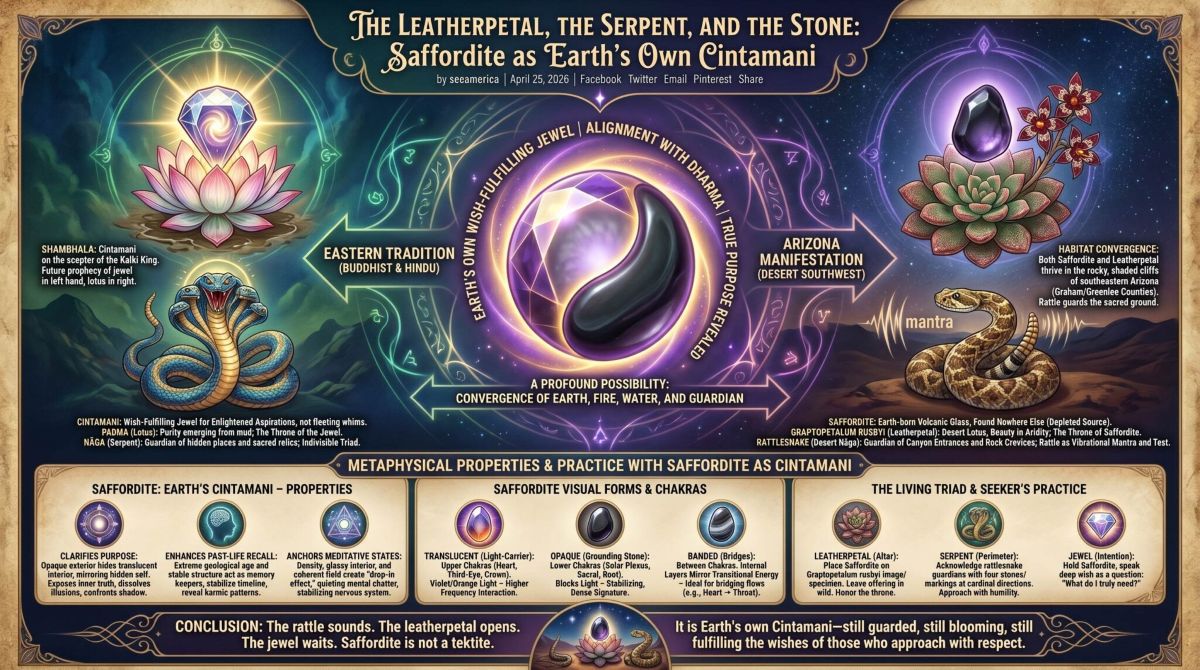
Among people who incorporate Saffordites into spiritual or energy practices, some practitioners associate gem-quality and translucent stones with crown and third-eye chakra work, banded stones with bridging or connecting chakras, and opaque stones with root-chakra or grounding practices. These are spiritual associations rather than measures of quality, and they do not mean that one type of Saffordite is better or more powerful than another.
Collectors may be just as drawn to an opaque or partially translucent stone because of its unusual shape, surface texture, color or other distinctive natural characteristics.
If internal color and translucency are especially important to you, look for photographs taken both under normal lighting and with the stone strongly backlit. Seeing both views gives you a better sense of how the specimen appears in everyday conditions and what it reveals when illuminated. Keep in mind that actual colors may vary depending on lighting conditions and device display settings.
When considering how to choose a Saffordite stone, translucency is worth noticing, but it is only one part of what makes each specimen distinctive.
6. Choose the Individual Stone That Speaks to You
After considering purpose, size, shape, texture, color and translucency, there is one final consideration that is harder to measure: which stone are you naturally drawn to?
You may begin thinking you want the largest or most translucent specimen, then find yourself returning to a smaller stone because of its shape, texture or overall character. Use the practical considerations in this guide to help narrow your choices, then pay attention to the stone that continues to catch your eye.
Sometimes the best Saffordite for you is simply the one that speaks to you.
There Is No One “Perfect” Saffordite
Learning how to choose a Saffordite stone is part practical and part personal. Size, shape, texture, color and translucency can help you compare specimens, but no single characteristic determines which stone is best for you.
The remarkable variation among Saffordites is part of their appeal. Each stone has its own combination of natural features, making every specimen distinctly individual.
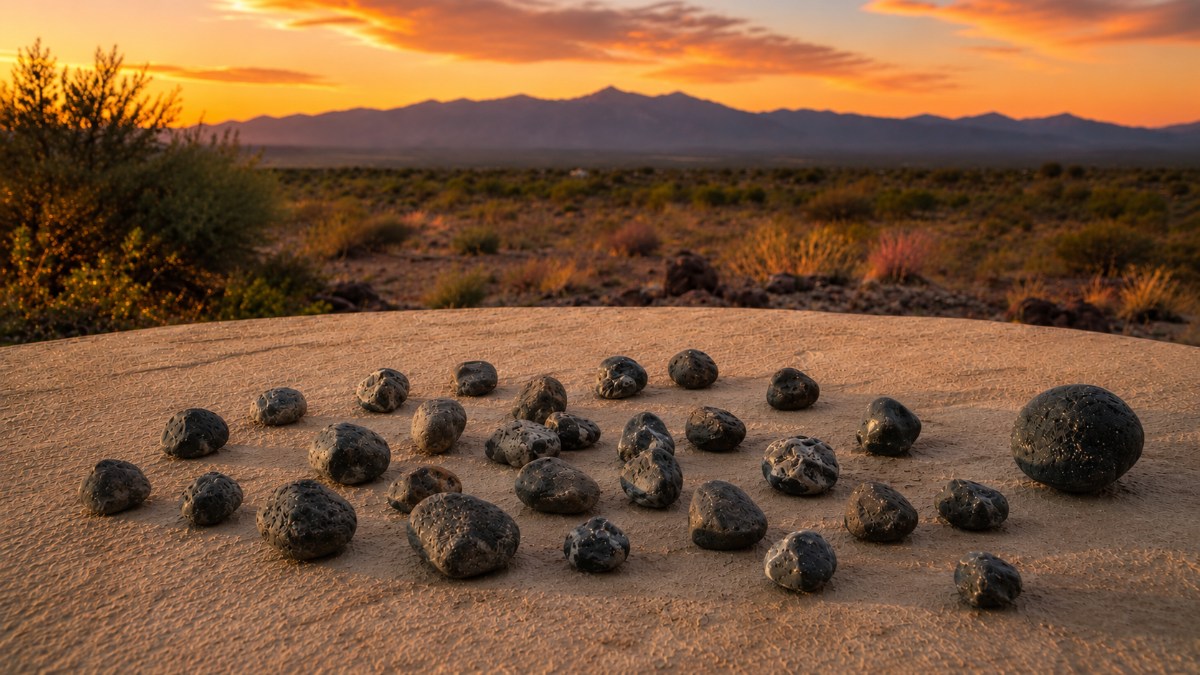
If you are ready to explore available specimens, you can view our current collection of Saffordites on Etsy. Because inventory changes as individual stones find new homes and new specimens are added, our Etsy shop is the best place to see what is currently available.
Explore Our Current Saffordite Collection
Want to learn more before choosing?
You may also enjoy these related Saffordite guides: